Yes. Most of a Costa Rica property's public record can be checked remotely: the registry entry, the cadastral boundary and the maritime-zone status are all available online, and an attorney or records service can pull the details for you. What you cannot check from home is the land itself, including access, occupants, boundary markers and what is actually built.
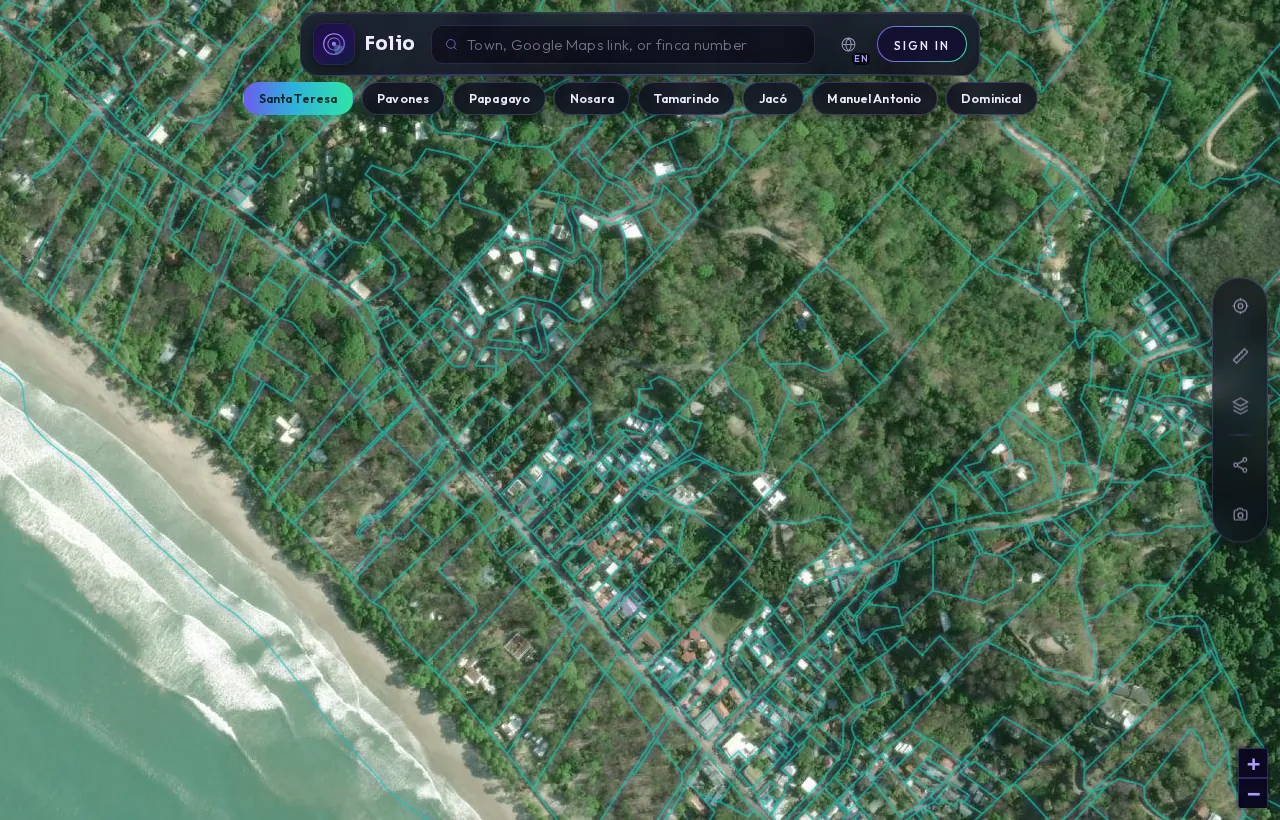
Any parcel, in the Folio app.
Search a town, a Google Maps link or a finca and Folio outlines the registered parcel from the national cadastre, with the maritime line, protected areas and water on top of it, before you call a lawyer or put down a deposit.
You can do a surprising amount of due diligence on a Costa Rica property from your kitchen table. The country's land records are digital, the official map is public, and the registry entry that tells you who owns a lot and what is registered against it can be requested online. Doing this work first means that when you do fly down, you are inspecting a property whose paperwork already makes sense rather than discovering problems after you have fallen for the view.
The limit is simple. Records describe the property on paper. They do not tell you whether the road washes out in the rainy season, whether someone is living on the back half of the lot, or whether the fence matches the boundary. A remote check narrows your shortlist and sharpens your questions. It does not replace a site visit, and it does not replace an attorney.
What can you check about a Costa Rica property remotely?
Costa Rica keeps two linked sets of records, and both can be consulted without being in the country.
- The property registry. Each registered property is a finca (a registered parcel with its own number). The registry entry shows the registered owner, the recorded area, and anything recorded against the title, such as gravámenes (encumbrances like mortgages and liens), servidumbres (easements) and anotaciones (annotations, often pending filings or court matters).
- The cadastre. This is the official map. It holds the plano catastrado (the registered survey plan) that defines the lot's shape, area and location on the ground.
- Location context. The official geospatial viewer lets you see where a lot sits relative to roads, rivers and the coastline, which matters if the property is near the beach and may fall within the maritime zone (zona marítimo terrestre), where different rules can apply.
Put together, these let you answer the first questions any buyer should ask: does this property exist as described, who is on title, and is anything recorded against it?
Where does the official information live?
The Registro Nacional's digital services are the official channel for registry consultations and certificaciones (certified extracts of a registry entry). This is where the ownership and encumbrance information comes from. Some services may require an account and payment, and the interface is in Spanish, so many foreign buyers have a local attorney, notary or records service pull the documents for them.
SNIT, the Sistema Nacional de Información Territorial, is the official map viewer run with the Instituto Geográfico Nacional and the Registro Nacional. It shows cadastral parcels and layers of geographic data. It is powerful but not especially friendly if you have never used a GIS viewer, and finding the right parcel can take some patience.
If you want to try this yourself, our guide on how to search the Costa Rica property registry yourself walks through the process and the vocabulary you will meet along the way.
What does a remote title check actually tell you?
A registry extract is the closest thing to a property's official biography. When you or your attorney read it, the key items are:
- Who the registered owner is, and whether that matches the person or company offering to sell. A seller who is not on title is not automatically a scam (they may be a representative, or a company shareholder), but it is a question that needs a clear, documented answer.
- Whether anything is recorded against the property. Mortgages, liens, easements and annotations all travel with the land. Some are harmless, some must be cleared before closing, and some are deal-breakers. Your attorney is the right person to say which is which.
- The recorded area, which you will later compare against the survey plan and what the seller has described.
- Which plano is linked to the finca, so you can check the boundary on the map.
For a fuller walkthrough of reading a title, including what each section of the entry means, see how to check a property title in Costa Rica.
One caution: a registry extract is a snapshot. It shows what was recorded at the moment it was issued. If you are close to signing, your attorney will want a fresh one, not the copy the seller emailed you months ago.
Tap any lot on the free map to see its cadastral boundary and area.
Check it freeHow do you confirm the lot on the map is the lot you are being sold?
This is an easy step for a remote buyer to skip. A listing can show photos of a beautiful hillside, the paperwork can name a finca, and nobody may check that the two are the same place.
The plano catastrado is what ties the legal record to physical ground. It shows the lot's boundary, dimensions and area. Comparing it with the registry entry and with the cadastral map lets you check that:
- the lot on the map is in the place the listing claims;
- the area on the plano is consistent with the area on the registry entry and in the listing;
- the boundary shape looks like what you have been shown in photos or drone footage;
- the lot has some recorded relationship to a public road or a documented access easement.
Mismatches can happen and are not always sinister. Older surveys, subdivisions that were never fully updated, and informal descriptions in listings all create gaps. But each gap is a question to put to the seller and your attorney before you spend money on flights. Our explainer on what a plano catastrado is covers how to read one.
Folio's free property check can help with the map side of this first pass. It is a map: tap a lot and you see its finca number, lot area, perimeter and boundary from the official cadastre, along with a flag if it touches the maritime zone. It does not show the owner, liens, encumbrances or the plano. Those come only in the verified report described below.
Get the free Costa Rica buyer's checklist
What to ask for, what to pull from the registry and what to confirm on the map before you sign anything. One short email, no spam.
What can't you check from home?
Public records are good at telling you about rights on paper. They are poor at telling you about conditions on the ground. These are the things that still need eyes, either yours or someone you trust:
- Physical access. A recorded easement is not the same as a passable road. Steep, unpaved or seasonal access can change what a property is worth to you.
- Occupants. People living on or using land without title (precaristas, informal occupants) do not show up in the registry. Dealing with them is a legal matter to raise with your attorney.
- Boundary markers. Fences, walls and survey monuments may not match the plano. Only a site visit, ideally with a surveyor, will show whether they do.
- What is actually built. Structures, additions and pools may or may not reflect permits or the registry description.
- Water in practice. Whether water actually reaches the property, and from where, is a practical question as much as a legal one.
- Neighbors and surroundings. Noise, nearby construction and the character of the area are things you feel, not things you read.
A sensible order of work before you book a flight
A sensible sequence looks like this. It keeps costs low early and saves the expensive steps for properties that survive the cheap ones.
- Ask the seller or agent for the finca number and the plano. If they will not provide them, treat that as information.
- Locate the lot on the official map and compare its area, shape and location with the listing.
- Check whether the lot touches the maritime zone, since that can change what kind of ownership is possible.
- Get a current registry extract and read who owns it and what is recorded against it.
- Write down every mismatch or open question and send them to the seller in writing.
- Engage a Costa Rican attorney or notary to review the documents and advise on what each item means for your purchase.
- Only then plan a visit, ideally with a list of specific things to look at on site.
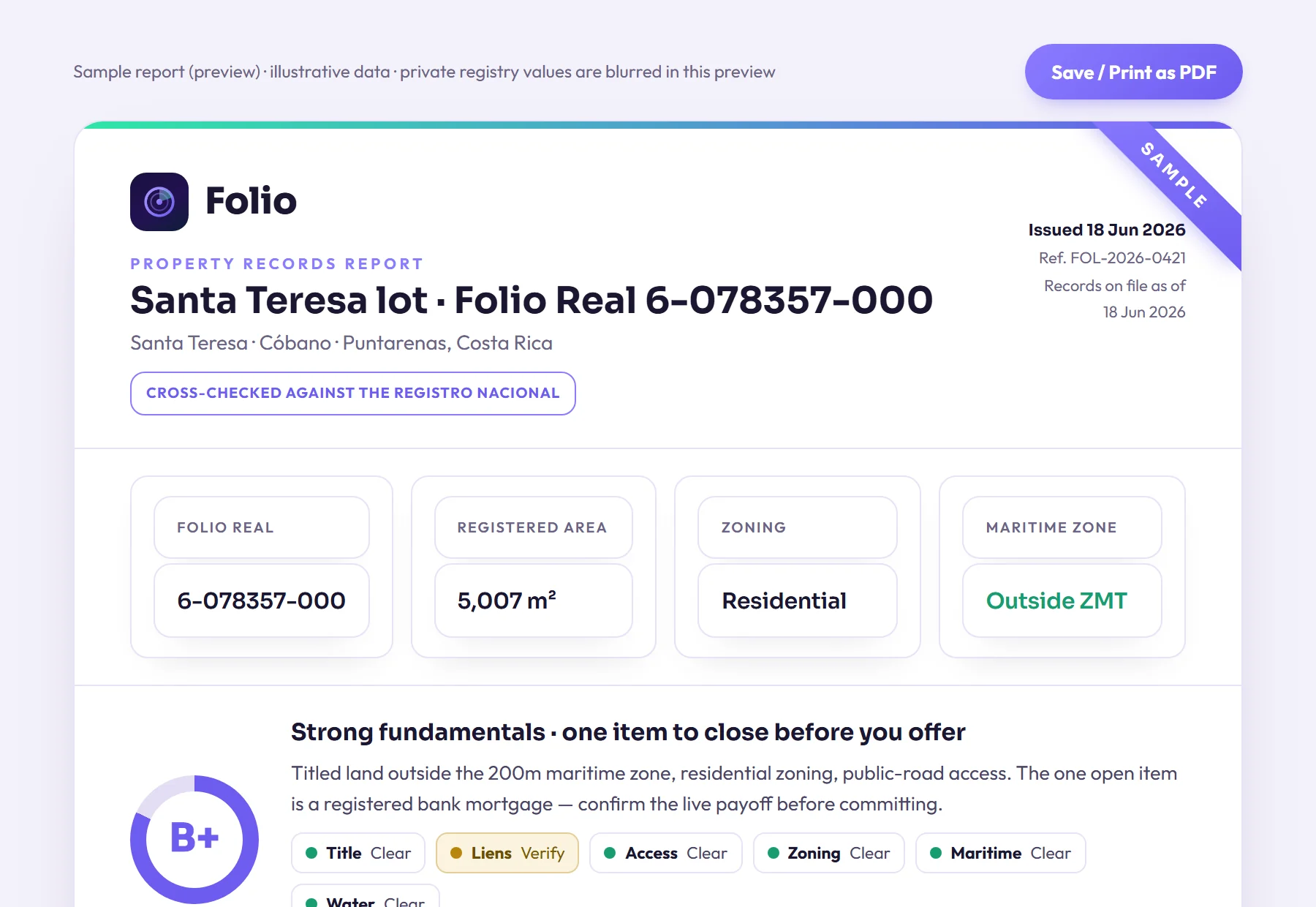
If you would rather not wrestle with Spanish-language registry portals, Folio's verified report covers key parts of the records side for $29: a human-checked title and records search showing the registered owner, liens, taxes, water rights and the exact maritime line, delivered within 24 hours. It shows what the public records say. It is a starting point for your attorney, not a substitute for one.
When should a lawyer get involved?
Early. You can do the map work and read a registry extract yourself, and doing so will make you a much better client. But interpreting encumbrances, deciding whether an annotation matters, structuring the purchase and handling closing are legal work. If something in the records is unclear, ask your attorney to confirm which rule applies rather than relying on a seller's explanation or a forum thread.
The goal of checking remotely is not to finish due diligence from abroad. It is to arrive in Costa Rica already knowing which questions matter, and with a property whose paperwork has given you a reason to keep going.
Know what you're buying before the deposit.
Most problems with a lot don't show up in the listing, and often the seller doesn't know about them either. Folio lets you find them now, before you pay a lawyer to start the purchase.
Frequently asked questions
Can I see who owns a Costa Rica property online?
Yes, ownership is recorded in the national property registry, and registry consultations and certified extracts are available through the Registro Nacional's digital services. The portal is in Spanish and some services may require an account, so many buyers ask an attorney or records service to pull the entry for them.
Does checking the map tell me if a property has liens?
No. The cadastral map shows a lot's boundary, area and location, but liens, mortgages and other encumbrances are recorded on the registry entry for the finca. You need both the map and a current registry extract to get the full paper picture.
Is a remote records check enough to buy a property?
No. Records show legal rights on paper, but they cannot show access conditions, informal occupants, fence lines or what is actually built. You still need a site visit, ideally with a surveyor, and a Costa Rican attorney or notary to advise on the purchase.
What should I ask a seller for before I fly down?
Ask for the finca number and the plano catastrado. With those you can locate the lot on the official map, compare it to the listing, and request a registry extract to see the registered owner and anything recorded against the title.
Sources
- Registro Nacional digital services (certificaciones and registry consultations), Registro Nacional de Costa Rica
- SNIT, Sistema Nacional de Información Territorial (official geospatial viewer), Instituto Geográfico Nacional / Registro Nacional
Educational, not legal advice. Folio reports what public records show; it does not replace a licensed Costa Rican attorney, notary or surveyor. Confirm material facts with them before any transaction. Photos are illustrative.