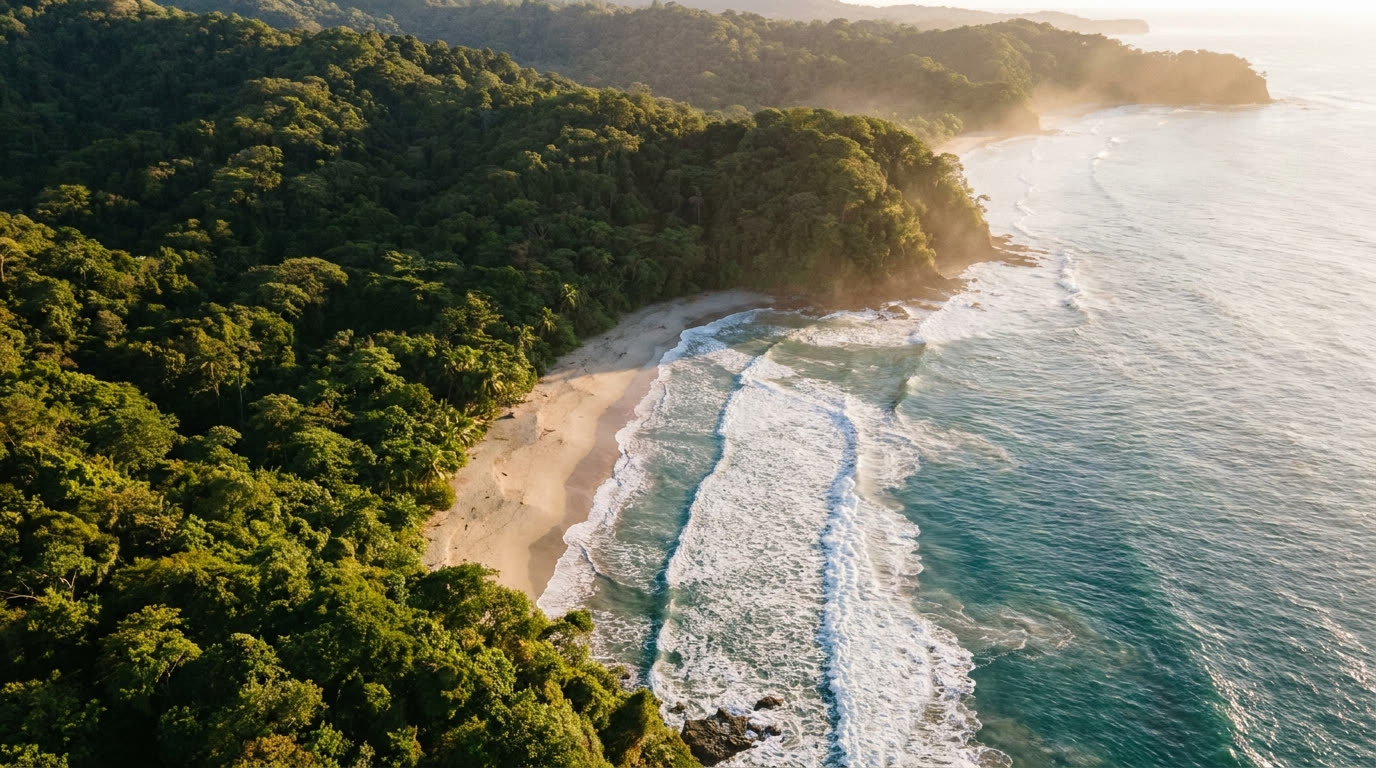
Where you are, exactly
Santa Teresa and Mal Pais are neighboring Pacific-coast towns at the southern tip of the Nicoya Peninsula, in the district of Cobano, canton of Puntarenas, in Puntarenas province. They sit along an open surf coast reached by roads that are still partly unpaved in places.
The area draws surfers, remote workers and international buyers, which means listings move fast and the pressure to decide quickly is real. That pressure is exactly why area-specific due diligence matters here. A rushed deposit on a coastal lot can lock you into problems that a calm hour of checking would have caught.
Folio checks any property here against the maritime-zone boundary and the registry, and tells you instantly whether you are looking at titled land or a concession.
First question: the maritime zone
Because this is an open beach coast, the maritime terrestrial zone (ZMT) is the first thing to resolve on any property near the water. The first 200 meters from the high-tide line is generally public land, used by concession from the municipality rather than owned by private title. Land set back from that strip can be fully titled.
A listing calls a lot "beachfront" or "steps from the sand." Sometimes the buildable part is titled land behind the 200-meter line, and sometimes the good part is maritime-zone concession. These are very different things to own. Confirm which one you are buying before you wire anything.
If a property touches the maritime zone, that is not automatically bad, but it changes everything about how you buy it and who can hold it. Read the Maritime Zone guide and bring in counsel before you commit.
Second question: legal access and the road
Many of the best-positioned lots sit up hillsides or along secondary roads. On a beach coast with a lot of raw and subdivided land, legal recorded access is a genuine question, not a formality. A lot can look reachable in person and still lack a registered right of way, which turns it into a landlocked parcel you cannot properly develop or resell.
- The lot has legal, recorded road accessA registered public road frontage or a recorded easement, not just a track someone drives on.
- The access survives the rainy seasonAsk how the road behaves in the wet months, and whether a normal vehicle reaches it year round.
- The plano matches the groundThe registered cadastral map should line up with the boundaries you are actually shown.
Third question: water
Water is a real constraint on parts of this coast, especially for raw lots away from an existing town connection. A stunning building site is only worth building on if it has a legitimate water source or an available connection. Do not assume a lot has water because neighbors seem to. Confirm the specific source or connection for the specific parcel.
The Water Availability guide walks how to check a source or a pending connection before you count on it.
A beautiful, affordable hillside lot with a huge view, no title clarity, no recorded access, and no confirmed water. It photographs perfectly and sells fast, and it can be nearly impossible to build on or resell. Check all three before the view convinces you.
How Folio helps here
Folio overlays any Santa Teresa or Mal Pais property against the official maritime-zone boundary, pulls the registry picture and flags protected-area and flood context, so from the first minute you know whether a lot is titled land, whether it has obvious access and water red flags, and whether it is worth a trip and a lawyer at all.
Free to start. If it is clean, great. If it touches the maritime zone or has an access or water flag, you will know before you spend a dollar.
Frequently asked questions
Where exactly are Santa Teresa and Mal Pais?
Neighboring Pacific-coast towns at the southern tip of the Nicoya Peninsula, in the district of Cobano, canton of Puntarenas, in Puntarenas province.
Is beachfront here titled or a concession?
Much of the true beachfront is inside the maritime zone, which is generally concession, not title. Land set back from the 200-meter line can be titled. Confirm which one a specific property is before buying.
What is the single biggest thing to check?
Three things, honestly: maritime-zone status, legal recorded access, and a real water source or connection. A view lot missing any of the three is a common and expensive trap.
Can I still buy safely here as a foreigner?
Yes, on titled land with clean access and water, foreigners buy on the same footing. Maritime-zone concessions carry participation limits and need counsel. Start by confirming which kind of property it is.