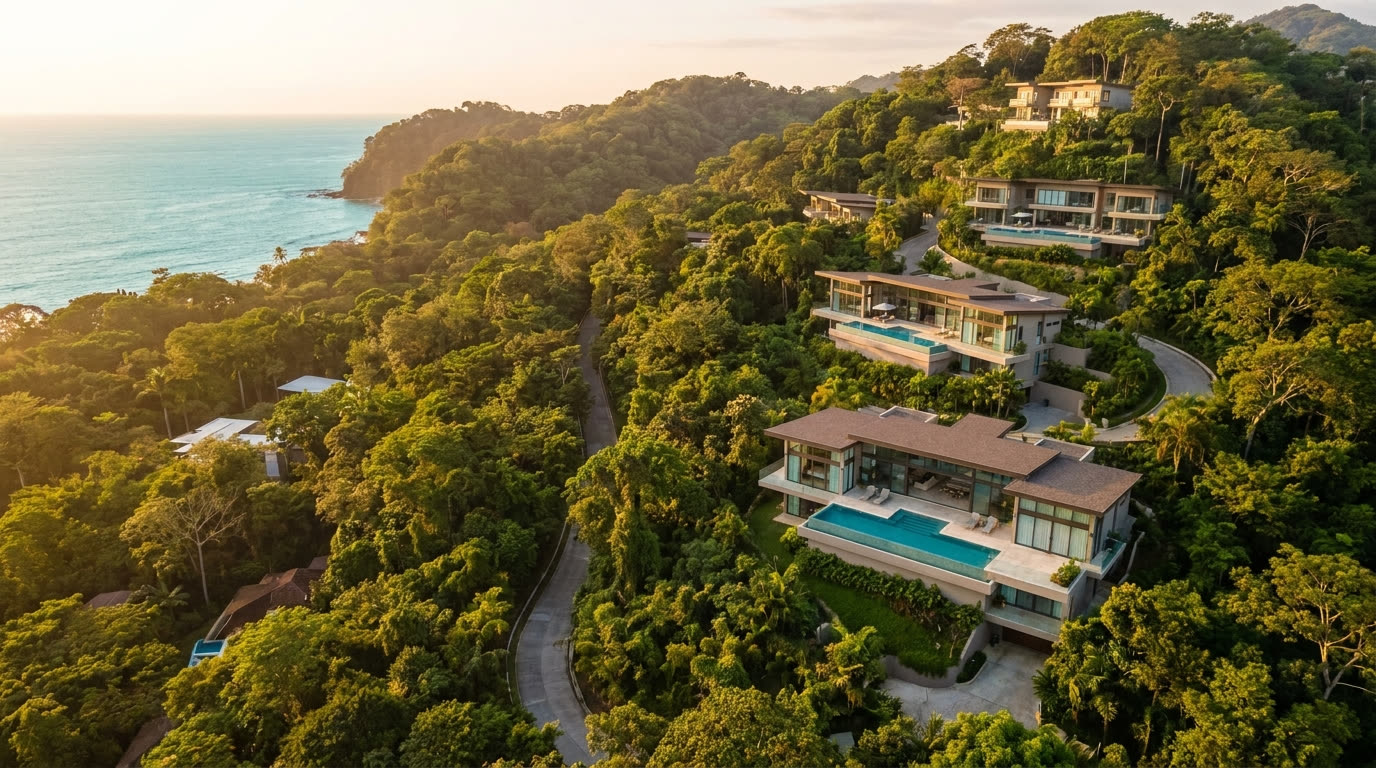
Can you buy property in Costa Rica?
Yes, and more freely than most countries. On titled land, foreign and local buyers have the same ownership rights. No residency, citizenship, or local partner is required. The one exception is the coastal maritime zone (first 200 m from the shoreline), which is held by concession rather than owned outright.
What decides whether a purchase is safe is not your nationality, it is whether the specific property has clean, registered title and no hidden problems. This guide takes you through the whole process and links to the deep page for each step.
Before you spend a peso on a lawyer, see what the official records say. Folio pulls cadastre, maritime-zone, protected-area, flood and water data on any Costa Rica property, in one tap.
The 7 stages of a Costa Rica purchase
Most purchases follow the same path. Where each stage has a deep page, it's linked.
You agree price and terms, usually in a written offer or an option/purchase agreement (a compraventa or opción de compra). Get it in writing before anything else.
An earnest-money deposit goes into a regulated escrow account, never straight to the seller. How escrow works →
The critical window. Verify title, liens, plano, occupancy, water, zoning and maritime-zone status before the money is committed. The checklist →
Terms, contingencies, closing date and who pays what are locked in the SPA. This is where representations, warranties and walk-away rights live.
The notary drafts and authorises the transfer deed (escritura). Only a CR notary can do this. Funds move from escrow at signing.
The transfer is filed with the national registry. Once recorded, ownership is legally yours. About title & the folio real →
Keys, utilities transfer, any HOA/condo handover. Confirm taxes and fees are settled to the closing date.
Stages 3 and 5 are where money is lost, one to skipped verification, the other to signing paper you didn't understand. The Closing Process page walks stages 4–7 in detail.
What you must verify before you pay
These are the checks that decide whether you own what you think you own. Full interactive version on the Due-Diligence Checklist.
- Clean, registered titleA real finca with a
folio realat the Registro Nacional, and the seller is the registered owner. - No liens or disputesNo mortgage, embargo or litigation annotation against the finca.
- Survey matches the groundThe registered plano catastrado and legal access match reality, confirmed by a surveyor.
- Legal water & allowed useA water letter where you'll build, and zoning that permits your plans.
- Maritime-zone status knownWhether the parcel touches the 200 m ZMT, titled vs concession changes everything.
What it costs to buy
Beyond the purchase price, budget for closing costs. These are commonly around 3–4% of the registered value in total and are frequently split between buyer and seller by agreement. Figures below are indicative and must be confirmed current with Hacienda and your notary at closing.
| Cost | Typical basis | Notes |
|---|---|---|
| Transfer tax (traspaso) | ~1.5% of value | Confirm current rate, Hacienda |
| Documentary stamps | ~0.8–1% | Registry, agrarian, municipal & other stamps |
| Notary / legal fee | per official tariff | Regulated notary arancel; often ~1–2% |
| Escrow fee | flat / small % | Charged by the SUGEF-registered agent |
| Due diligence | varies | Attorney review, survey, water/municipal checks |
Costa Rica has an annual property tax of roughly 0.25% of registered value, plus a separate luxury-home tax on higher-value residences. Budget these as ongoing costs, confirm current rates and brackets with Hacienda.
Titled land vs concession (the maritime zone)
The single biggest structural distinction in Costa Rica property. A "beachfront" listing is often the second column, not the first.
Titled land (propiedad titulada)
- Registered fee-simple ownership
- Foreigners can own 100%
- Recorded in the Registro Nacional
- Sell, mortgage, will it freely
Concession (ZMT, first 200 m)
- A municipal right to use, not title
- First 50 m is public: no ownership
- Foreign participation capped (Ley 6043)
- Depends on plan regulador & canon payments
Neither is automatically better, but they carry completely different risks. Read the Maritime Zone page →
How to hold your property
Personal name
- Simplest, lowest cost
- No annual corporate obligations
- Succession runs through CR probate
CR company (S.A. / SRL)
- Easier succession, partner ownership
- Some privacy & liability separation
- Annual corporate tax + legal upkeep
Decide with a CR attorney and your home-country tax advisor. Ownership structures in depth →
The biggest mistakes buyers make
Wiring outside escrow, skipping the due-diligence period under time pressure, trusting "beachfront titled" without checking the ZMT, using only the seller's notary, buying land with no legal water where they plan to build, assuming lot size equals buildable area.
Each of these, and how to avoid it, is on Common Buying Mistakes → Closing Costs → Property Scams → Financing →
Run the free check on a property you're considering. If it's worth pursuing, the $29 report gives you and your lawyer the full official-data picture before you commit.
Frequently asked questions
Can a foreigner buy property in Costa Rica?
Yes, on titled land, with the same rights as a citizen and no residency required. The maritime zone within 200 m of the shoreline is the exception and is held by concession. See the Foreign Buyer's Guide.
How long does buying take?
Commonly 30–60 days from accepted offer to registered title, driven by the due-diligence window and preparing the transfer deed. Clean cash deals can be faster.
What are the total costs?
Closing costs commonly run about 3–4% of value (transfer tax, stamps, notary), often split with the seller, plus escrow and due-diligence costs. Confirm current rates with Hacienda and your notary.
Do I need a lawyer?
Yes. Only a CR notary can register a transfer, and you want independent counsel for due diligence and the contract, not just the seller's notary.
Should I pay cash or finance?
Most foreign buyers pay cash or use home-country financing; local bank mortgages are slower and favour residents. Financing choice does not affect your right to own.
Is title insurance available?
Title insurance exists in Costa Rica but is not standard. Thorough due diligence on a clean registered title is the primary protection; discuss whether a policy adds value with your attorney.